[Updated 22 August 2026]
Please do not confuse this tour with my 3 Cities Free** Walking Tour (2 hours long, pay-what-you-want, and super fun). This page is for those who want to walk around the 3 Cities alone, without a guide.
If you do plan on booking a tour with me, then do not read any more of this guide. Otherwise you'll ruin your own experience when we actually walk through most of the spots 😊
With the above being said, enjoy 😊
You can download a mobile-friendly PDF file here.
It begins immediately below:
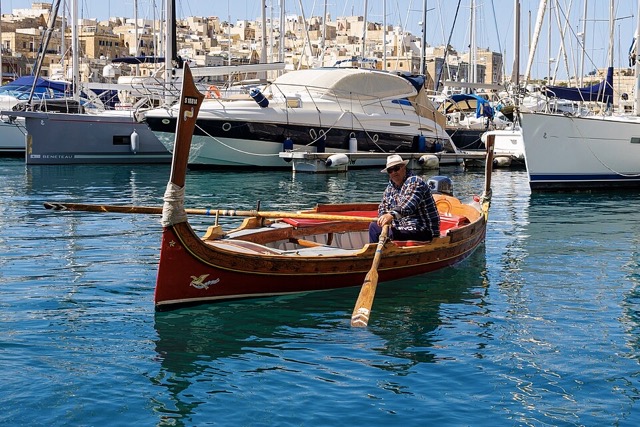
If are staying in Valletta, I would strongly recommend you start the tour in Valletta, specifically here and catch one of the traditional water taxis. €3 per person cash, and quickly and picturesquely drops you off at our starting location below.
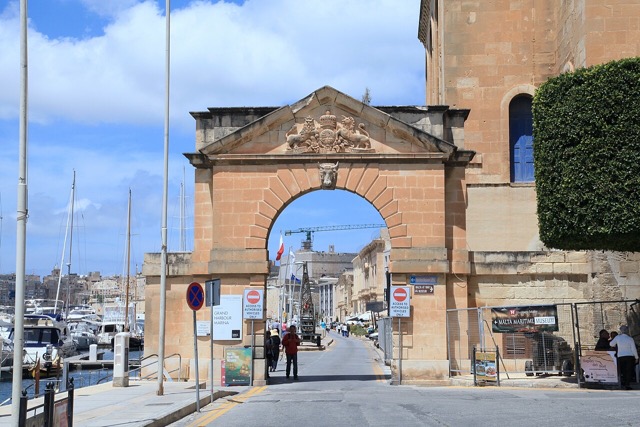
Pictured here is the Admiralty Gate built during the British period. You can see at the top of the gate the coat of arms of the United Kingdom, with a lion on the left, and a unicorn on the right. Inside the coat of arms you will see 3 Lions on the top left and bottom right representing England, a lone lion on the top right representing Scotland, and a harp on the bottom left representing Ireland. Underneath the coat of arms you will see a bull's head representing that this was were the food of the sailors was prepared.
The British were here in Malta from 1800 to 1964. The 3 Cities area was an important Naval Base Area, many sections were closed off to the public, and locals found much employment with the British Admiralty.
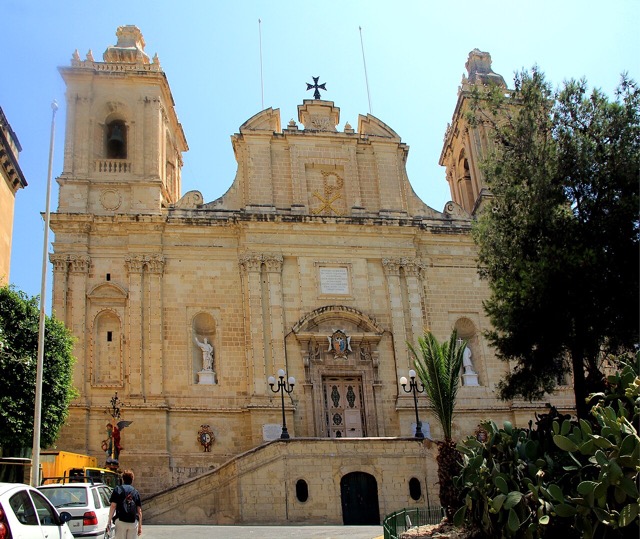
Finished in the late 1600s St Lawrence church was built by the Knights of St John. You can see their 8-pointed Maltese cross on the top and in the middle.
The niche on the left of the main door has a statue of St Paul, notice he preaching and converting the Maltese to Christianity, and there is a large snake at his feet, as he was bitten by a snake in Malta.
The niche on the right features the eponymous St Lawrence. He is holding his usual symbol the grid iron. Why? St Lawrence was placed on a large grid iron and a fire was lit underneath him effectively grilling him. He is also the patron saint of cooking.
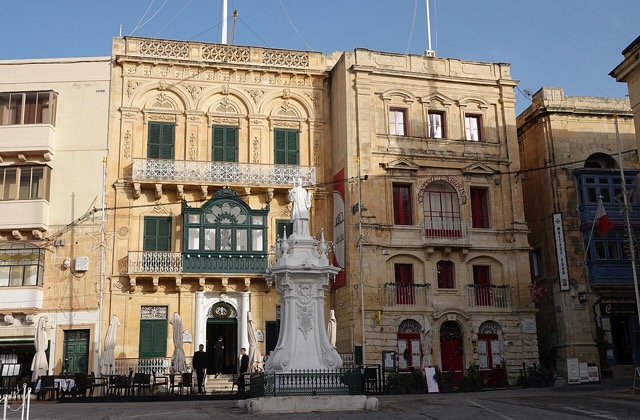
A walk up the hill takes us to the main square of Birgu/Vittoriosa.
In the main square there is a statue of a lady with a sword in one hand, and shield and palm leaf in the other (not pictured here). She represents Victory, hence the palm leaf (a symbol of victory). She is representing the 1565 victory of the Knights of St John over the Ottoman Empire in the Great Siege of Malta. That's why Birgu is also called Vittoriosa.
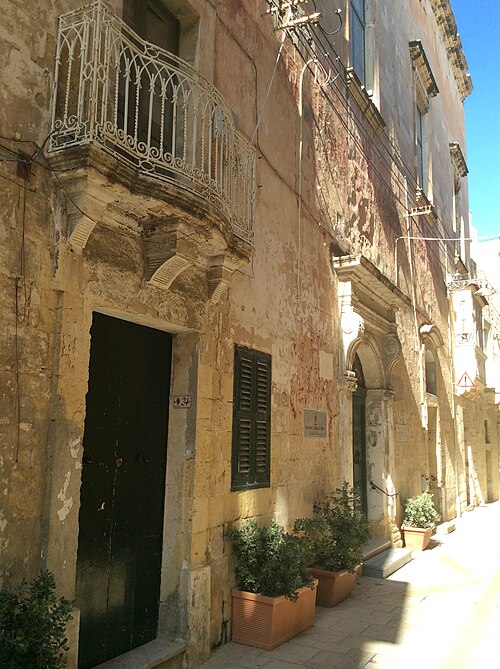
The Collachio is a medieval area of Birgu the Knights of St John took over. They then built their auberges or lodgings and headquarters where they could reside and convene. The whole area was cut off to the population at large and was used as their "convent". You can explore these picturesque streets for a while.
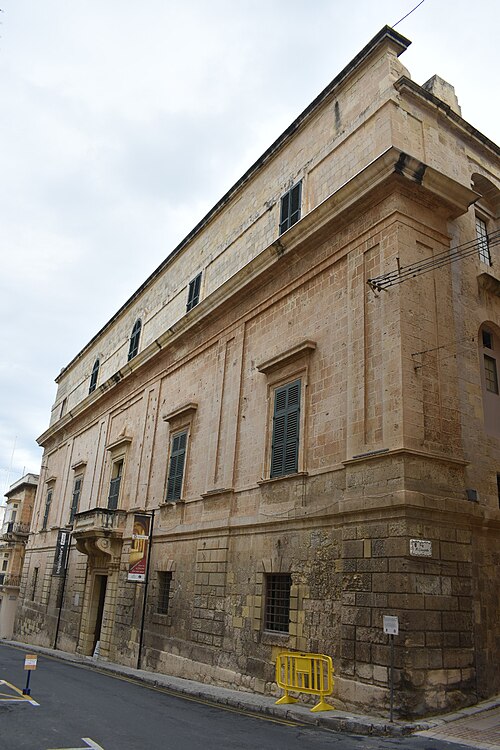
The Inquisitor was a very powerful figure and answered only to the Pope. He would often spy for the Pope on the Knights of St John.
The Inquisitor's Palace is a truly fascinating building replete with court room, prison cells, and of course torture room.
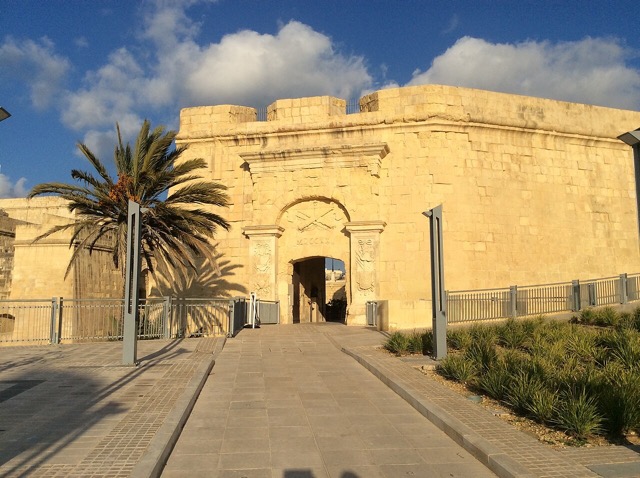
We're leaving Birgu through the 3 Gate system. This was built in the 1720s by the Knights of St John. Each gate is at right angles to the next gate, so that if the enemy breached on gate they would be exposed on their sides.
On your right and away from the gate you should see a lovely view of the harbour.
Be careful as you cross the road, we will now enter Bormla aka Cospicua.
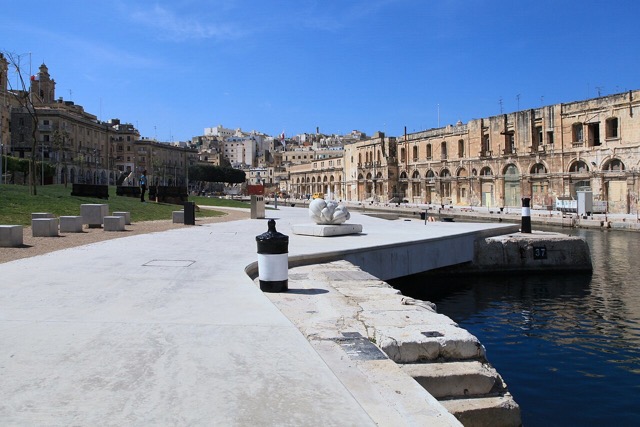
You've reached the Bormla / Cospicua waterfront. This whole area was closed off to the public and formed part of the British Navy base. In fact to the left of the bridge the current pool is made up of two dry docks used by the British. The long buildings on either side of the bridge were ship repairing facilities used by the Knights of St John and later the British.
Let's cross the bridge and walk along the water front onto Isla / Senglea. Please be careful when crossing the roads.
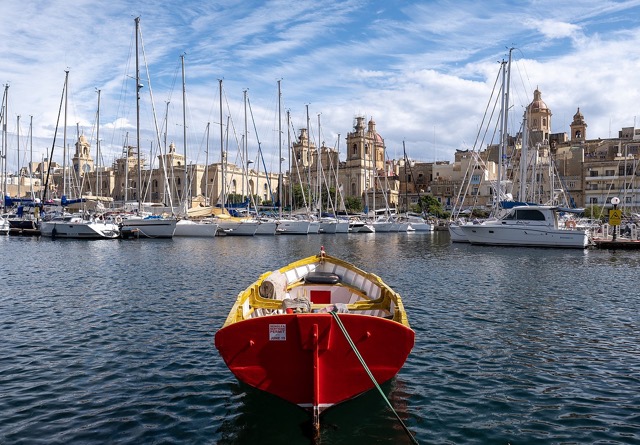
Isla / Senglea is known as the fishermen and sailor's town. As we walk along you will see many small boats that are being repaired or maintained, and are still in use.
There are also many good restaurants in this area, and I would recommend a meal or refreshment along the sea. For recommendations on where to eat you can go here: Ben's 3 Cities Food & Drink Recommendations.
Now we walk all along the waterfront and up the incline to the very tip of Isla/Senglea and the Gardjola Garden.
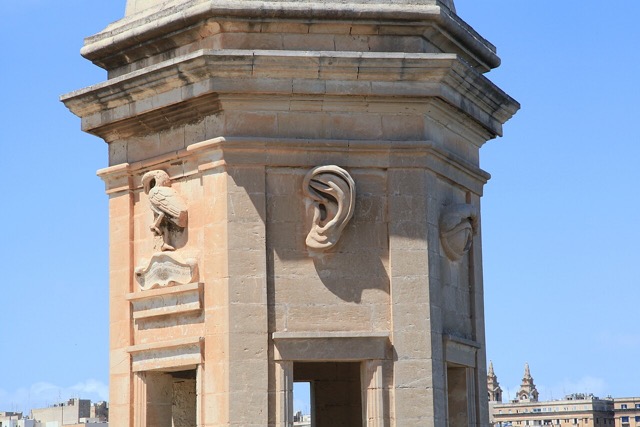
This garden was originally a military location built by the Knights of St John. Notice the gaps in the walls which would have held cannons. At the end is a the guard tower, notice the giant eye and ears, which symbolise the duties of the guards to keep looking and listening. The stork is also a symbol of vigilance.
This is the end of the tour. Again, I might suggest eating a meal along the Isla/Senglea Waterfront. You can also go to the center of Isla and catch the number 1 bus, or walk back all the way to the water taxis or the Cospicua - Valletta ferry.
I hope you enjoyed this guide of the 3 Cities.
If you're interested in joining me for a walking tour please visit my website BenGoodTour.com. I have 2 hour tours of Valletta, Mdina, and the 3 Cities.
Thank you 😊
If you'd like to donate/tip any amount it would be greatly appreciated 🙏
See what Free Walking Tours I offer and more articles by returning to BenGoodTour.com website.