[Updated 22 August 2026]
Please do not confuse this tour with my Mdina Free** Walking Tour (2 hours long, pay-what-you-want, and super fun). This page is for those who want to walk around Mdina-Rabat alone, without a guide.
If you do plan on booking a tour with me, then do not read any more of this guide. Otherwise you'll ruin your own experience when we actually walk through most of the spots 😊
I made this tour for the Couch Surfing community. I purposely kept it light and simple. And obviously, I say much more in my actual walking tours of Valletta, Mdina-Rabat, and the 3 Cities.
You can download a mobile-friendly PDF file here.
It begins immediately below:
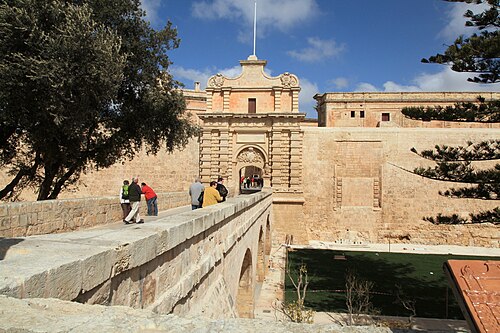
The main gate of Mdina. In 1693 there was a large earthquake off the coast of Sicily and it destroyed the gate. (Look to the right of the main gate and you'll see the outline of the older gate) So in 1720s this gate was completed in a Baroque Style.
Mdina is often described as a medieval city, but it's a large mix of styles. The walls were made in the 1500s by the Knights of St John, the gate 1720s (as we said), and inside Mdina there are many buildings from the 1700s, 1800s, early 1900s, so a big mix of styles.
Mdina gets its name from Medina which literally means "city" in Arabic. Most of the placenames in Malta get their name from the Arabic period (870-1091). Hence also the name Rabat which can mean that there's something fortified in the area.
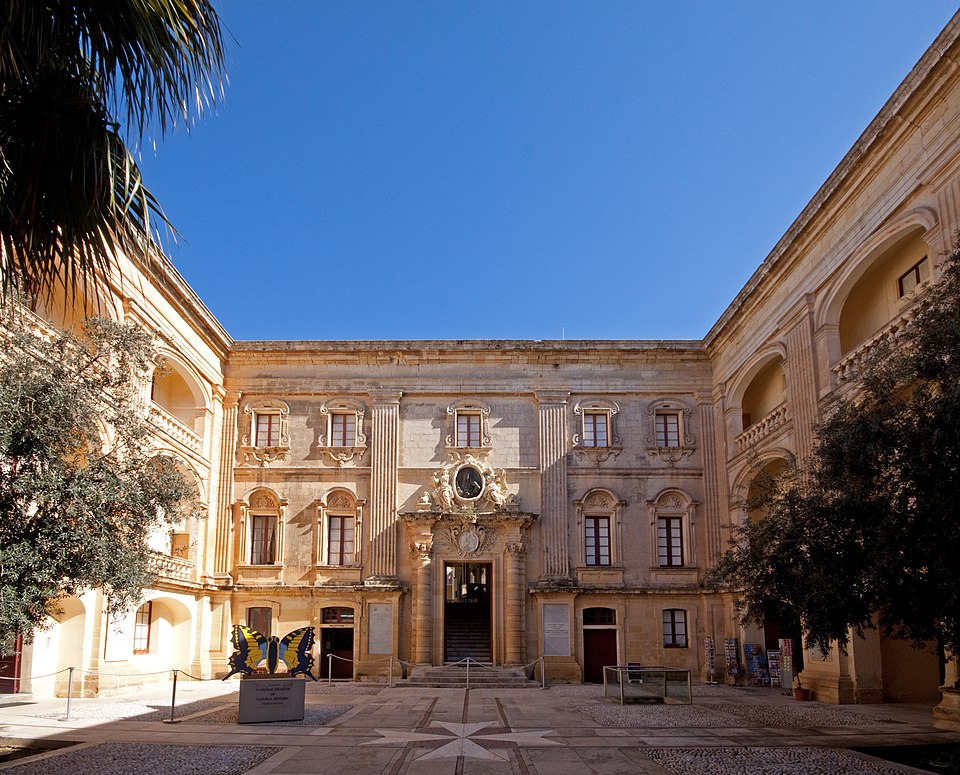
The person who paid for the gate in the 1720s was Grandmaster Manoel de Vilhena. And since he paid for the gate he also built this palace for himself and the knights. You can see his LinkedIn profile pic above the main door. He's wearing a wig and armour very common for the Knights of the 1700s.
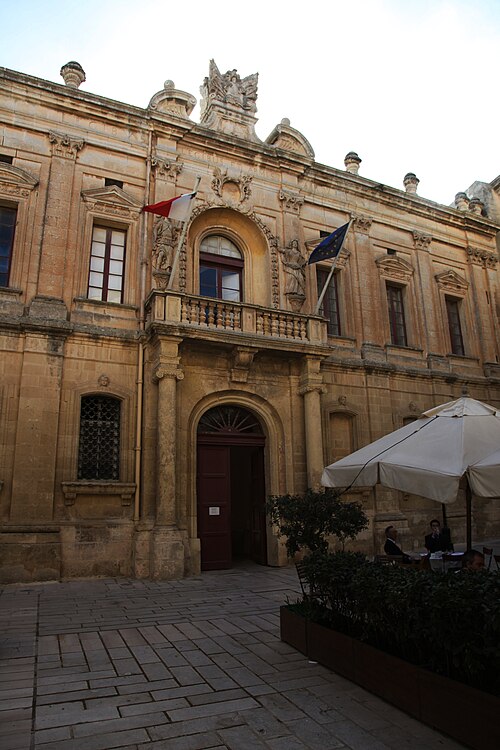
Until the Knights of St John arrived to Malta in 1530, Mdina was the capital city of Malta for over 2,000 years. The Palazzo Giuratale functioned as the law courts for all of Malta. (Notice the lady with blindfold on the right of the balcony - representing "Justice". The lady on the left represents "Mercy")
The building now houses the Local Council of Mdina. Mdina has a population of 193 people according to the 2022 census.
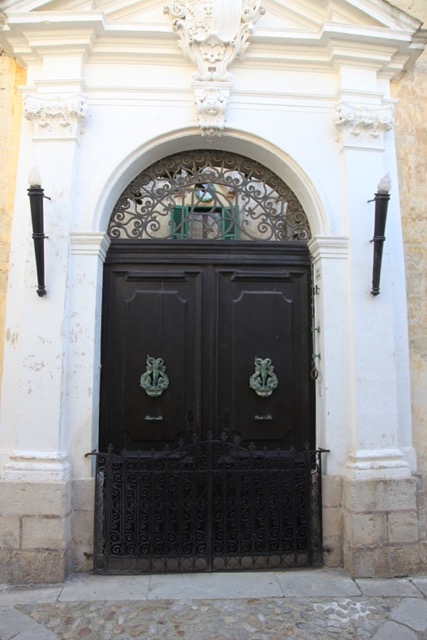
Mdina is full of narrow medieval streets. And also full of palaces of Nobility. The house in front of you belongs to the oldest noble family in Malta: the Inguanez family. They have lived in Malta since 1350!
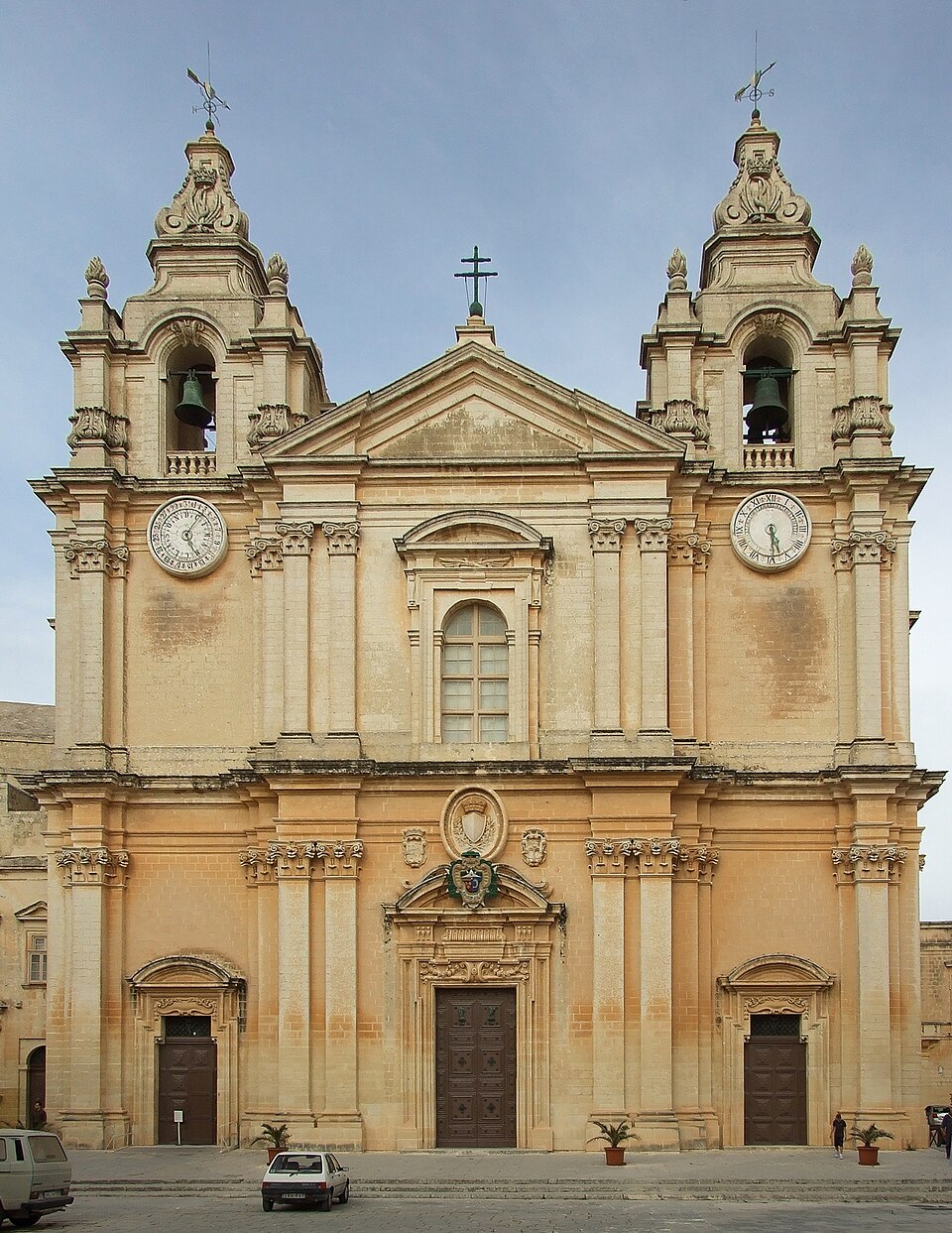
Mdina being the capital city of Malta housed the Cathedral - the highest ranking church in Malta. In 1693 there was a huge earthquake off the coast of Sicily (as we previously mentioned), and so they built a new cathedral which was finished in 1705.
The cathedral towers over Mdina, but Mdina is also on top of a hill, which makes the cathedral tower over the rest of Malta.
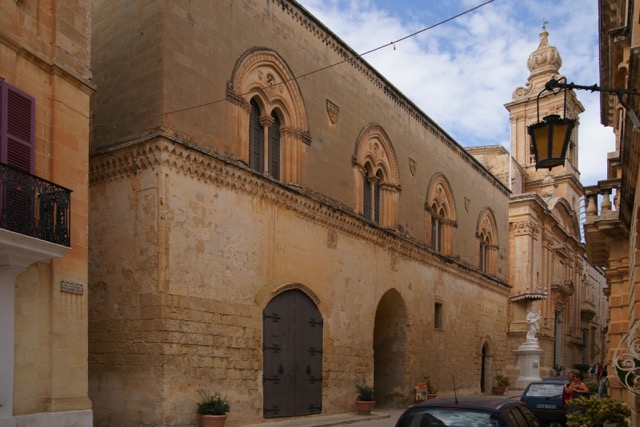
This is a palace of another noble family the Santa Sofia family. The lower half of this building was built in the 1300s! This is one of the oldest buildings in Mdina. The upper half was built in the 1900s in a fake Norman style (the Normans conquered Malta in 1091 - ending the Arab rule).
(Go left of the above location, and climb the stairs)
One of the best views in Malta. You can see almost the entire eastern coast of Malta: on the far left the town in the distance is St Paul's Bay, that's where we say St Paul got shipwrecked in the year 60AD.
Looking more to the right, you might see a single solitary white tower on it's own. To the right of that: a church dome. That's Valletta.
You can see why people in the ancient times chose Mdina as the spot for their capital: it had a commanding view of half of the island. The eastern beaches were where the enemy would usually land.
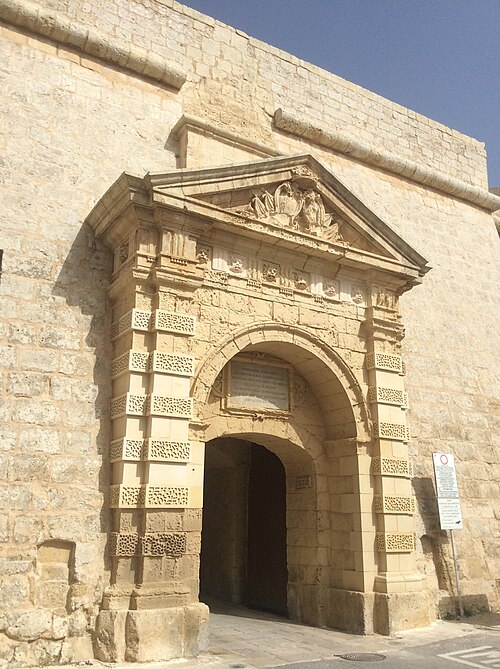
Historically this gate was used by the lower class and the slaves of Mdina. It was called the Greek's Gate because a community of Greeks also lived in Malta. They arrived in Malta with the Knights of St John in 1530, when the Knights lost Rhodes.
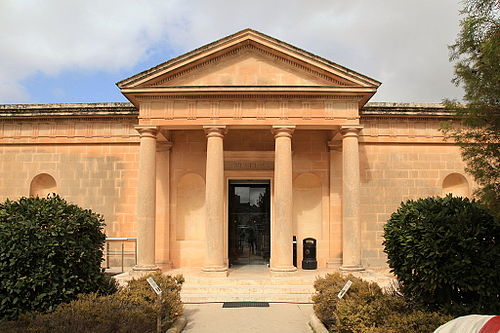
Underneath Mdina and the neighbouring Rabat is the ancient Roman city of Melita. This museum you see in front of you has Roman mosaic floors, statues, and other items found in a rich person's Roman house. Dated 100BC to 100AD.
If you walk along the side of the museum you can see some Roman remains of lesser houses here.
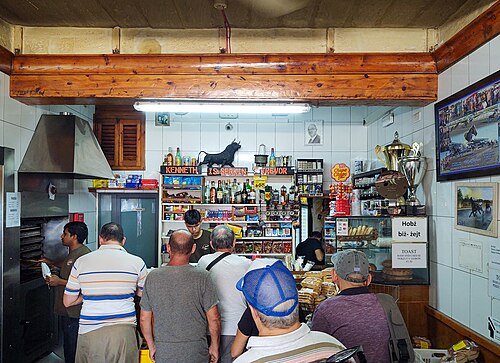
I know we've already talked about Pastizzi in the Valletta tour. But this place is the most famous in all of Malta; because it's open 24/7.
You can also try a Ftira - a sourdough bread sandwich. Usually it's with tomatoes, bean paste, cheese. However, you can have it with whatever you want. And it's usually very cheap! My favourite place at the moment is La Rabtija, but I also like Chez Eman which is very close by.
I hope you enjoyed this short guide of Mdina.
If you're interested in joining me for a walking tour please visit my website BenGoodTour.com. I have 2 hour tours of Valletta, Mdina, and the 3 Cities.
Thank you 😊
If you'd like to donate/tip any amount it would be greatly appreciated 🙏
See what Free Walking Tours I offer and more articles by returning to BenGoodTour.com website.